
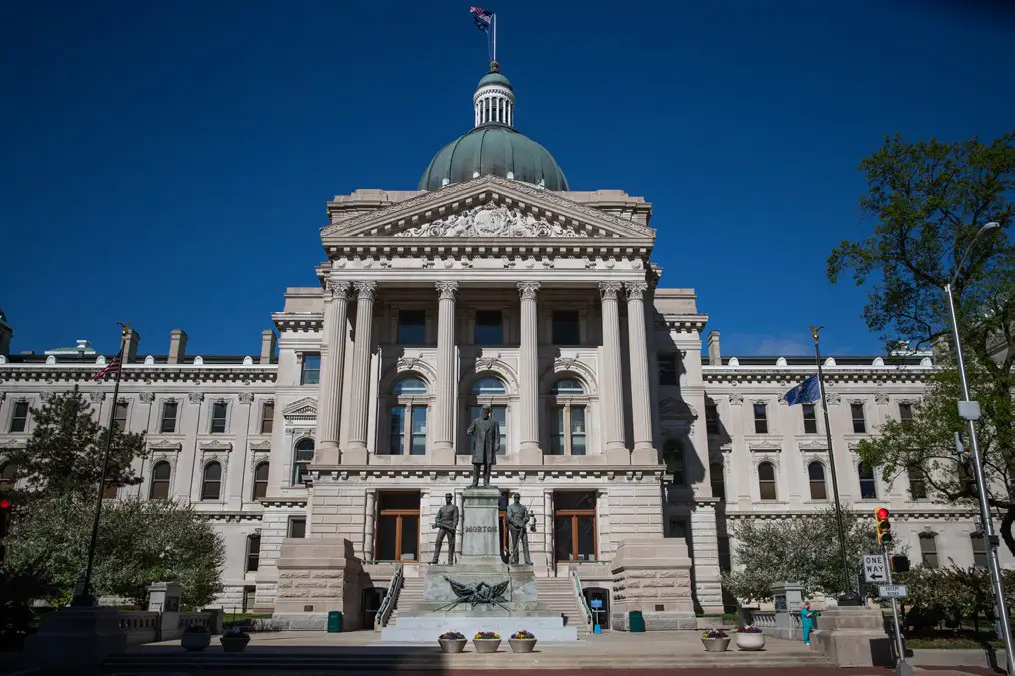
In a major turn of events for Hoosier politics, the proposed redistricting map in Indiana was rejected by the state Senate, marking a significant victory for advocates of fair representation. The plan, which many State Senators argued was designed to entrench partisan divide, faced overwhelming opposition, not only from the Democratic caucus but also from a surprising number of Republican senators.
The proposal failed to pass despite the Republican supermajority in the Senate, with 21 out of 39 GOP senators voting against it. This unexpected coalition of dissenters reflects a growing recognition among lawmakers that fair mapping is essential for maintaining the integrity of Indiana’s electoral process. Those opposing the measure highlighted concerns that the proposed map would disproportionately benefit the Republican Party rather than the constituents they represent, undermining the principles of democratic representation.
Governor Mike Braun expressed his disappointment with the outcome, labeling the dissenting Republicans as a “small group of misguided State Senators,” even though the majority of Republicans voted against the redistricting measures. He framed their decision as a rejection of leadership from President Donald Trump and emphasized the need for maps that protect Hoosiers. However, the reality is that many lawmakers are increasingly aware that fair representation serves the interests of all constituents, not just the party in power.
The failure of the redistricting map is a testament to the power of grassroots advocacy and the determination of voters to demand transparency and equity from their elected officials. Many Republicans, alongside bipartisan allies in the Senate, see this as a moment to push for better practices around redistricting that prioritize community voices over partisan gain.
As discussions continue in the wake of the map’s rejection, leaders are eager to leverage this momentum to advocate for more transparent and equitable processes in future redistricting efforts. There is a growing consensus that voters deserve districts that accurately reflect their communities, rather than those crafted to maintain the status quo for any political party.
The rejection of the redistricting map signals a crucial moment in Indiana politics. It serves as a reminder that when constituents come together and make their voices heard, real change is possible. As we move forward, it is imperative that lawmakers prioritize the interests of their constituents and work collaboratively to ensure that the democratic process is safeguarded. The fight for fair representation in Indiana is far from over, and the majority of State Senators remain committed to advocating for a political landscape that truly reflects the will of the people.
After the final vote, which resulted in a rejection of the redistricting plan by a margin of 31 to 19, Governor Mike Braun released the following statement:
“I am very disappointed that a small group of misguided State Senators joined forces with Democrats to reject this opportunity to protect Hoosiers with fair maps and to turn their backs on the leadership of President Trump. Ultimately, decisions like this have political consequences. I will be working with the President to challenge those who do not represent the best interests of Hoosiers.” – Governor Mike Braun
Loading Comments